Author: Elliott

  • A town raw with fear

    A town raw with fear

    Traumatized Joplin on edge as more storms rake Missouri

    JOPLIN, Mo | Wed May 25, 2011 6:28pm EDT

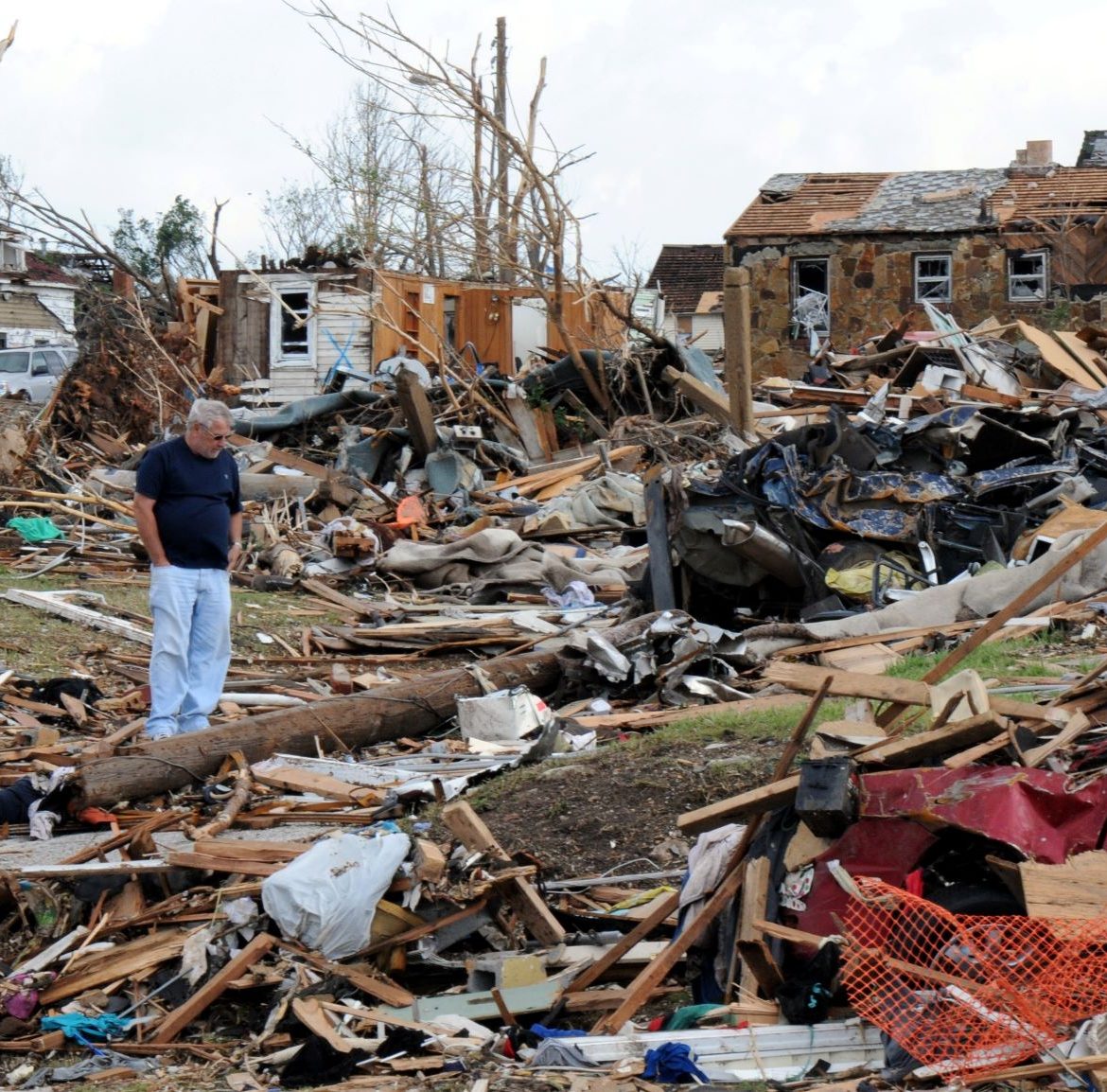
    (Reuters) – Traumatized residents kept a wary eye on storm clouds hanging on Wednesday over the shredded remains of a large portion of this city.

    Chainsaws and hammering could be heard in the neighborhoods surrounding the hardest hit areas three days after a devastating tornado ripped through this town of 50,000, killing 125 and injuring at least 823.

    Residents took advantage of hours of sunlight to check their property and clear debris. But as adrenaline and shock faded, residents near the damaged zone described a fear of every rumbling in the wind.

    Overnight, another wave of killer tornadoes roared across the Midwest, leaving at least nine people dead in Oklahoma, four dead in Arkansas and two in Kansas, officials said.

    And on Wednesday, several fast-moving, strong storms raked Missouri, triggering tornado warnings all across the state.

    Jerry Harris rode out 200 miles-per-hour winds with his daughter in a closet in his friend’s homes, which was all that remained of the residence after the storm passed.

    The 42-year-old had years of training as a 911 dispatcher, he said, but felt panic the next morning when he heard the rumbling of a heavy truck.

    “It just scared me to death,” Harris said.

    Now, he is obsessed with having all his children around during storm warnings to assure himself they are safe.

    Rick Rice, a 57-year-old truck driver, said he would never again dismiss the sirens he ignored Sunday. He had continued to remodel his bathroom as the tornado approached. The storm left his home uninhabitable.

    Now he spends his day monitoring the Internet for weather updates haunted by the roaring of the wind.

    “When I hear the noise, I can’t get it out of my mind,” Rice said.

    Even residents who missed the worst of the storm changed habits. Greg Salzer, a 37-year-old social worker, watched the tornado from a safe distance. He and his wife restocked their storm shelter the next day with shoes, important papers and dog leashes.

    “We spent Monday going through the storm shelter cleaning,” he said.

    On Wednesday, he was helping his uncle, 66-year-old Frederick Dalton, clean debris not far from a ruined hospital.

    Dalton said he had walked for blocks after the storm to find his wife safe at a destroyed church.

    The Joplin tornado on Sunday was rated an EF-5, the highest possible on the Enhanced Fujita scale of tornado power and intensity, with winds of at least 200 miles per hour.

  • Scorched Earth

    Scorched Earth

    US | Tue May 24, 2011 8:46pm EDT

    Drought and fire jeopardize ranching lifestyle in Texas

    LUBBOCK, TEXAS | BY ELLIOTT BLACKBURN

    A miserable sea of dry brown West Texas grass and charred scrub could cripple ranching operations in the country’s top beef-producing state.

    “Right now, it’s literally day-to-day, and Mother Nature’s holding all the cards,” said Dennis Braden, general manager of the 130,000-acre Swenson Land and Cattle Co.

    In the state where cowboys riding the open range on horseback herding cattle spawned a whole western culture, modern-day ranchers are hurting.

    Severe drought and millions of acres of wildfires have delivered a potent one-two punch this year, forcing tough decisions on ranchland across Texas.

    The state’s livestock industry has lost $1.2 billion under withering conditions, according to the Texas Agrilife Extension Service, part of Texas A&M University.

    It’s a bitter pill for Braden and the more than 120-year-old ranch located 170 miles west of Fort Worth.

    In Texas and other states with large cattle herds, the beef industry chain starts at the ranch. Farmers own a herd of beef cows, each of which gives birth to a calf in a typical year. The mother nurses the calf and the pair graze on grass all summer, fattening up the calf for market. The young calves are eventually weaned from their mothers and sent to feedlots to be fattened on grain for slaughter.

    This year, ranchers should be reaping the benefits of high prices, low supplies and high demand for their beef

    The demand from for calves from feedlots, where cattle add hundreds of pounds before slaughter, seems insatiable. The Swenson ranch entered this season planning to grow by thousands of cattle over several years.

    But he and other calf growers instead spent this spring in a desperate hunt for pastureland and contemplating selling all of their livestock.

    His ranch has seen more fire than rain since September. Wildfires roared out of a canyon and went on a 35-mile march across his and neighboring remote ranchland in April, consuming thousands of acres of mesquite and pasture.

    Cattle subsisted on dead grass as his cowboys worked to keep the cattle healthy enough to bear new calves.

    West Texas did not have the water to irrigate hay, and thousands of acres of drought-ridden wheat fields never produced a crop.

    If conditions do not improve by August, he will run out of even low-quality feed for his herds, he said.

    “We don’t have the grass resources to keep those calves around,” Braden said.

    Fire alone will not devastate a ranch, and managers may often use controlled burns to improve the range. A good blaze can clear away the tall, dead brush hiding the green grass that helps bulk up the herd.

    Emerald fuzz covered scorched patches of Swenson ranch after less than an inch of rain provided the area’s first shower in nine months.

    Given a good spring storm, the tough, hilly scrub would look like Ireland, Braden said. But the most recent shower was not near enough to break the drought.

    Without acres of green, protein-providing grass, cows will struggle for nutrients. The herd will lose interest in breeding and cows will not even provide enough milk to their own calves, bringing the first step of America’s beef cycle to a halt.

    The outlook for more rain looks grim. The National Weather Service’s Climate Prediction Center forecast below-normal rainfall for Texas over the next month at least.

    The cash-green carpet that sprang up from wildfire ash could brown under the Texas sun.

    “Couple of days of 40 mile-per-hour winds and 100-degree temperatures and it will go back to buckskin,” Braden said. Ranches that could afford it hunted for rare acres of pasture outside the state.

    Joe Leathers, manager of the historic 6666 Ranch in Guthrie, about 100 miles east of Lubbock, had moved cattle to New Mexico to keep a prized genetic line alive.

    He could not consider liquidating the herd with ranch families and years of breeding programs depending on him, he said.

    “If you had to sell your herd off and wait until it rains, you’re going to have 75 families out of a job, and a home,” Leathers said.

    “It sure would be nice if it rained,” said David Anderson, a livestock agronomist with the Texas Agrilife service.

    (Editing by Corrie MacLaggan and Greg McCune)

  • Small Victories

    Small Victories

    Find this at Reuters.com.

    Perfect strangers friends for life after Joplin tornado

    Autumn Achey

    By Elliott Blackburn

    JOPLIN, Mo | Sun May 29, 2011 10:30am EDT

    (Reuters) – Melody Dickey doesn’t remember the tornado hurling her car the length of three football fields or calling out for her nine-year-old daughter Autumn, who was ejected as it rolled.

    But she had no trouble at all on Friday recognizing the voice of the stranger who tied the tourniquet on Autumn’s badly cut leg and carried her daughter to safety.

    One week after a huge tornado ripped across this Missouri town of 50,000, authorities are still searching for 100 people listed as missing or unaccounted for.

    Two families conducted a different kind of search over the week, trying to find perfect strangers brought together by one terrifying night.

    Jimmie Joe Zaccarello, 49, had just survived a record tornado crushing like a trash compactor the Home Depot store where he worked. He crawled to safety through spaces in the collapsed steel roof outside.

    He was told to stay put, he said, and be counted. But he walked away to offer help.

    “The people I kept coming across were the deceased, and it was just horrible,” Zaccarello said. “Finally I found somebody alive, that I could do something, to try to help.”

    accounted 4
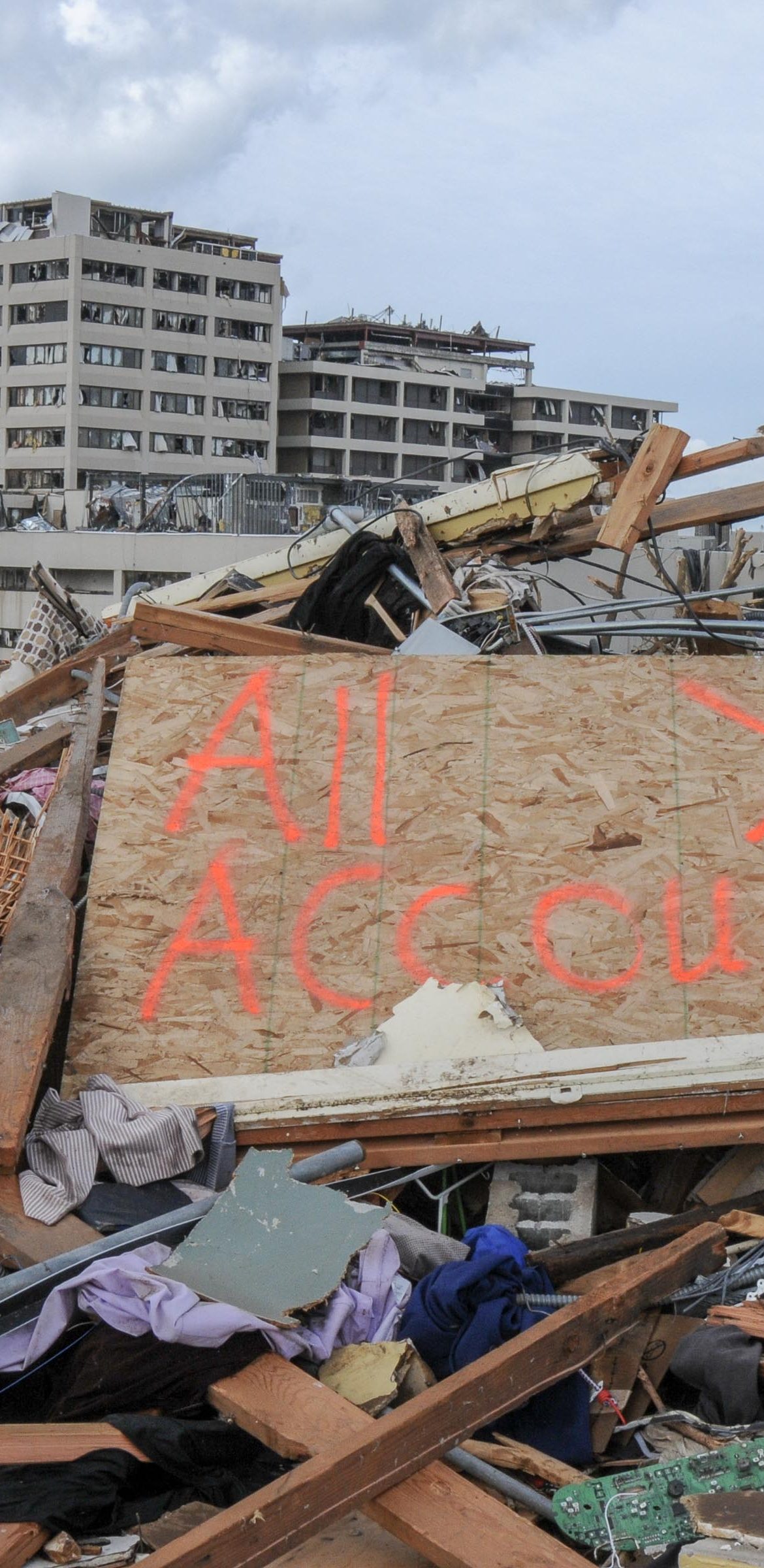
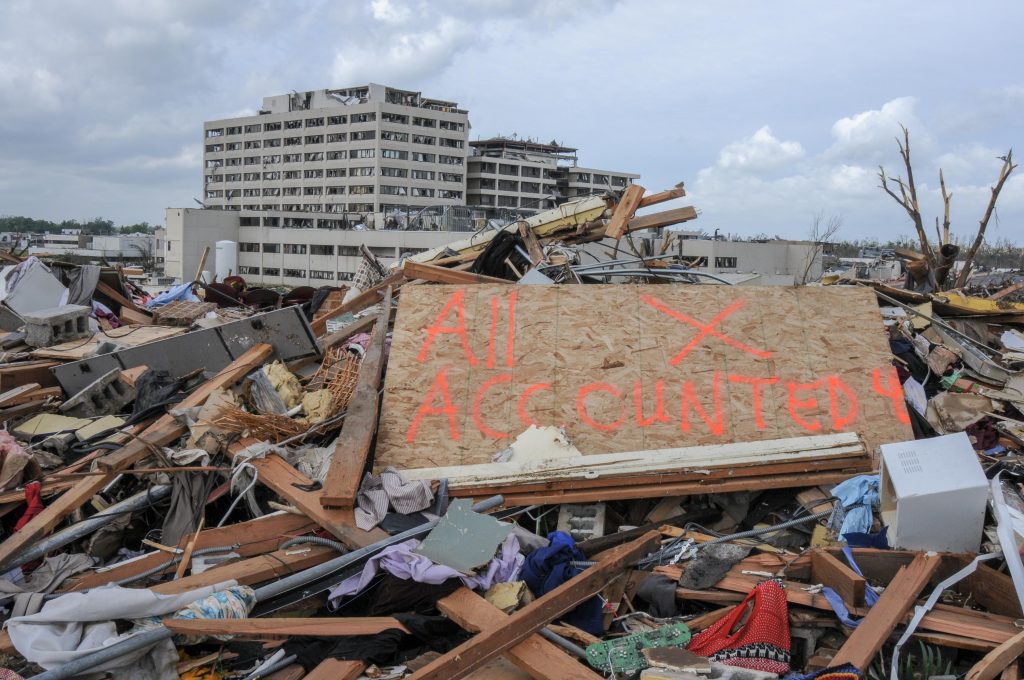
    A destroyed home near a ruined hospital in Joplin, Missouri, 2011.

    Melody Dickey and her daughter Autumn Achey left a trailer to rush to the safety of a best friend’s house when the storm caught them.

    They were stuck behind a slow moving truck. Dickey honked her horn, frustrated, when there was a sudden calm.

    “There was no wind, there was no rain, there was nothing,” Dickey said. “The last place I remember the car being was down by Home Depot.”

    Autumn remembered debris bursting through the rear windows. Melody remembered rolling, but not for how long.

    “I just told Autumn to hold on, I think,” before her daughter slipped from under the seatbelt and out of the car, Dickey said. “That’s all I could think about. Autumn was gone. There was no way she could have lived through it.”

    Autumn remembered sliding out of the car and covering her head, protecting herself from the storm. She hefted a large piece of metal debris off her back and called for her mother.

    “I was just thinking ‘I hope Mom’s here,’” she said. Two large gashes had opened in her leg.

    “Looked like a man took an ax to it,” Zaccarello said.

    Autumn was covered in mud and blood. She could hear her mother call her name, and followed it, limping along.

    They were the first living survivors Zaccarello found.

    “He just walked right up and picked her up,” Melody said.

    The short, wiry flooring specialist tore his shirt to tie a tourniquet on her leg. He could barely heft the little girl, but he struggled his way to emergency help, and angrily demanded they take her mother, too. Melody Dickey’s back was black with bruises and her shoulder dislocated.

    And for nearly a week, that was the last they saw of each other.

    Autumn’s father, Jim Achey, wandered the wreckage for hours that night before Melody could send him word where they were. The next person he wanted to find was the man named Jimmie who helped his family.

    Zaccarello needed to find the family, too. His home and family passed the storm unscathed. But he’d lost a home in a fire in 2005, and a daughter to liver disease in 2006, he said.

    He was depressed, thinking of all the death and destruction he saw Sunday, and desperate to know the little girl he helped — just two years older than his granddaughter — had made it through the storm.

    “I’ve just lost so much,” Zaccarello said.

    He called the local radio station, which has broadcast round-the-clock calls seeking friends, family, volunteers and places to drop donations. He choked up at times as he described his story.

    A friend told Jim Achey about the call. They rushed to find a radio at the hospital. Melody knew Zaccarello’s voice instantly.

    So Friday afternoon, a beaming Zaccarello and a tough, shy and exhausted Autumn had their reunion in the pediatrics ward of the town’s remaining hospital. She was cut and bandaged, and her leg hurt too much to walk. But she was safe.

    “I just wanted something positive to come out of it, you know?” Zaccarrello said.

    “It’s definitely positive, man,” Jim Achey said, tearing up. “You’ve got a friend for life.”

    (Editing by Greg McCune and Jerry Norton)

  • The storm’s aftermath

    The storm’s aftermath

    Joplin prepares for grim task of funerals

    By Elliott Blackburn

    JOPLIN, Mo | Sat May 28, 2011 11:35pm EDT

    (Reuters) – For some families, goodbye to victims of a powerful tornado that crushed buildings like twigs may only be a glimpse of a hand.

    Traumatic injuries to the remains of the dead could force families to dispense with the tradition of a public viewing in this small Midwestern city. State officials said Saturday the temporary morgue in Joplin included partial remains.

    The grim and daunting task facing the city’s three funeral homes, and some in surrounding communities, was preparing for memorial services and for burial or cremation of at least 139 victims.

    “All we can do is take our time,” said David Dillon, a former owner of Thornhill-Dillon Mortuary.

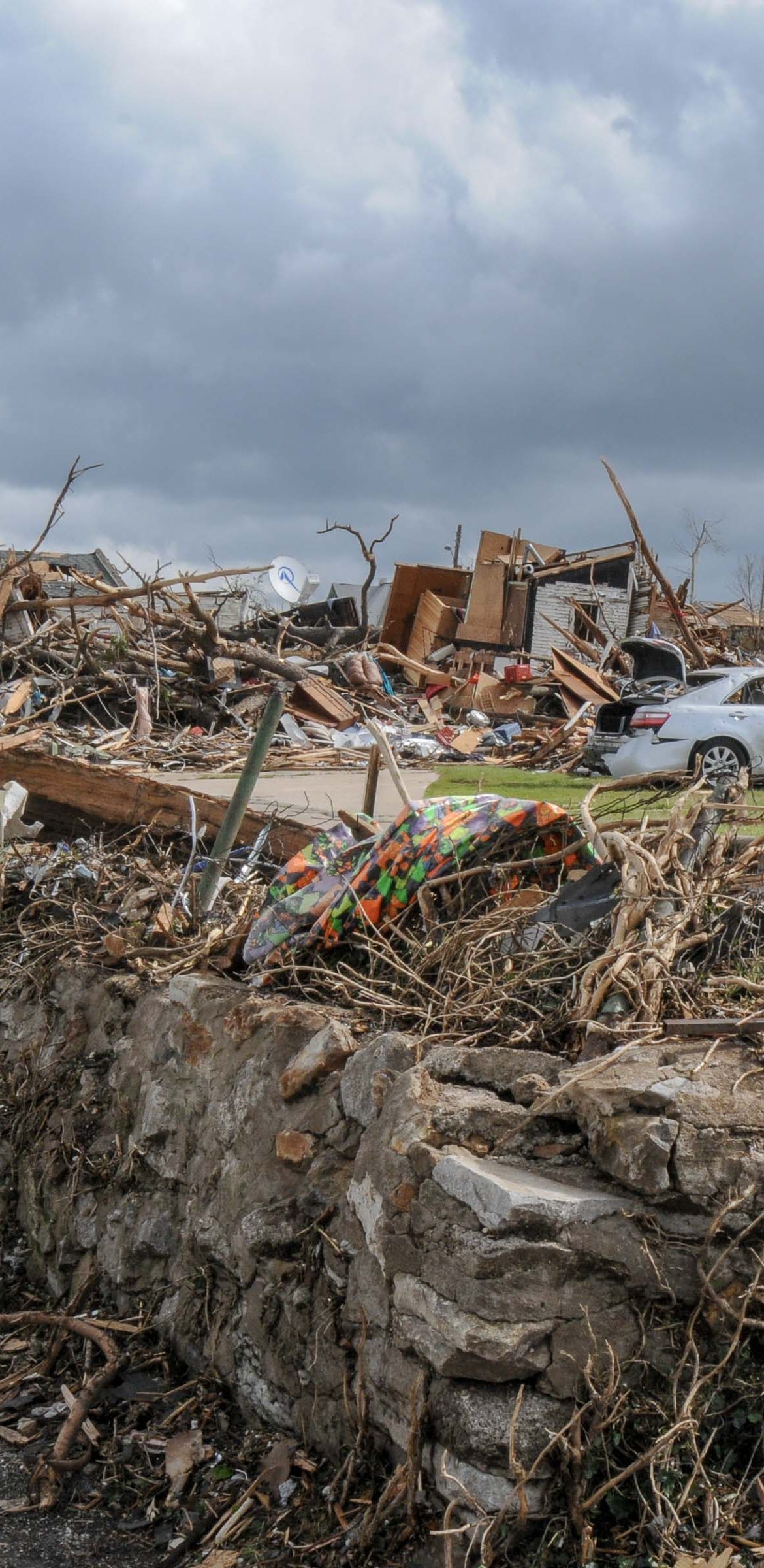
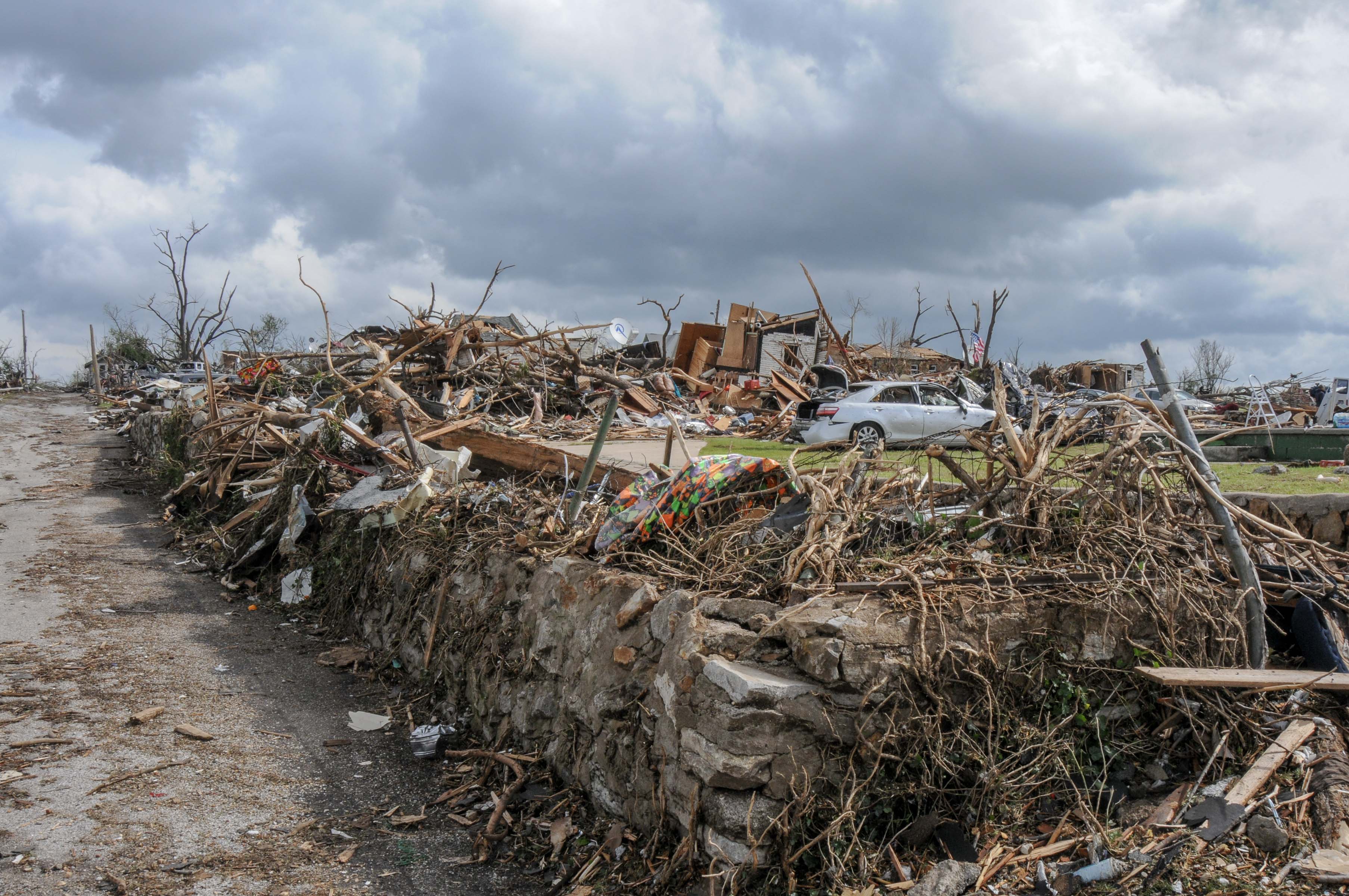
    A ruined street corner in Joplin, Missouri.
    A ruined street corner in Joplin, Missouri. 2011.

    The first funeral was in the nearby town of Galena, Kansas on Friday for 27-year-old electrician Adam Darnaby, remembered as an avid fisherman who liked fast cars.

    The first services for victims in Joplin will begin on Monday, more than a week after the tragedy, according to Dennis Dreyer, the director of operations for Ozark Memorial Park, where many the dead will be buried.

    The pace of the release of the dead has frustrated families anxious to recover loved ones and to move forward in their grief. Families of only 73 of the victims have been notified so far, because officials are following a painstaking process of identification to avoid mistakes.

    Lindy Molina drove in from Irving, Texas to try and find her sister and nephew. She found the nine-year-old boy safe, but neighbors said her sister, Melissa Crossley, had died protecting him from the flying debris. Molina brought pictures and tattoo references to the temporary morgue in Joplin, but had no success.

    “I personally do understand the process,” Molina said. “But it is frustrating.”

    While the slow release of remains has been stressful for families, it gave the funeral homes, churches and cemeteries time to prepare.

    Funeral homes here have worked to pull in resources from four states to handle services for victims. They expect the state of Missouri to release remains to families at a rate of 14 to 16 a day.

    A small army of part-time and former workers and volunteers will help. Anything the memorial services needed — from cars to caskets to embalming materials — were offered by the Missouri state funeral home association and from colleagues in Kansas, Arkansas and Oklahoma, funeral directors said.

    Funeral homes were ready to offer private viewings, when possible, for families still wishing to say goodbye to badly damaged remains, said Tom Keckley, co-owner of Parker Mortuary & Crematory in Joplin. Medical bandages and terry cloth could cover severe injuries, he said.

    “It might be looking at a hand that’s exposed while other parts are covered, but anything that will let that person know that that is their loved one,” Keckley said. “So that they accept it and can begin to heal.”

    Even for funeral home staff accustomed to consoling grieving families, the Joplin tragedy has been personal. Dillon recognized names on the list of missing.

    “You just hurt with them,” Dillon said. “You still have to be strong for them.”

    The Ozark cemetery will be working 12 hours a day, seven days a week, said Dreyer.

    His staff was still numb from the tragedy, and focused on day-to-day tasks. They held daily meetings to prepare for the overwhelming job ahead, he said.

    Preparing a grave site and holding a service could take four hours, he said. Many employees had pledged to donate their time for the victims’ funerals.

    “You’ll find Joplin is a close community,” Dreyer said. “From start to finish.”

  • Early Weed Farming

    Keep on the Sunny Side: Lubbock area farmers turn to sunflowers to save water, money

    Published: Sunday, September 07, 2008
    ELLIOTT BLACKBURN

    OLTON – Bright arcs of gold interrupt the cash-crop green surrounding this small farming town, welcomed by a handful of growers pushed into the unthinkable.

    Farmers here have covered thousands of acres with sunflowers, a gangly intruder for years best known for harassing the region’s dominant crops.

    Few Panhandle growers would consider sunflowers a savior. The wild strays towering awkwardly over farm road ditches and fields remain, for most, a deep-rooted weed robbing potential profit.

    But some South Plains growers now wonder whether the flower’s same frustrating qualities could extend the lives of their farms.

    “It’s a glorified weed that has a purpose,” said Billy Tiller, longtime dryland farmer outside of Littlefield who planted 1,000 acres of oil sunflowers this summer.

    The Ogallala Aquifer, sustainer of all irrigated agriculture and a drinking supply for Lubbock and other cities, has shrunk beneath Olton under the strain of cotton and corn.

    Water levels at an observation well southwest of town have dropped more than 35 feet during the last decade, according to records kept by the High Plains Underground Water Conservation District. Growers around the small community 60 miles northwest of Lubbock must reach deeper for irrigation than all but four other monitored sites the district tracks inside Lamb County.

    “It’s getting to where you can’t hardly keep the pressure up in the sprinklers,” said Ken Gallaway, a grain and cotton farmer who seeded a fifth of his 500 acres with sunflowers in late June. “The formation’s not giving up the water like it did years ago.”

    Gallaway, an easygoing former accountant, left office life more than a decade ago for the freedom of setting his own working hours outdoors.

    The numbers don’t work for the acres of corn separated from his sunflowers by a narrow dirt road, he said.

    High corn prices sparked a rural renaissance as ethanol brewers, cattle feeders, grocers and food processors seemed to add up to an insatiable demand. Corn prices doubled, tripled, and any land that had water to handle it – quite a bit that didn’t, too – chased the new gold.

    As corn raced up, so did much of the materials needed to grow it. Corn guzzles irrigation water and demands an array of chemicals and pricey seed. Fertilizer alone doubled in price from last year, according to the U.S. Department of Agriculture, and energy prices climbed 50 percent.

    Gallaway can’t even find the most common name-brand weed killer anymore. He couldn’t afford it if he did, he said.

    But those sputtering center pivots raised the biggest fears, he said. He didn’t expect to see corn, depending on the commodities market, beyond three to five years.

    “We’re just losing our water,” Gallaway said. “So we’ve got to

    come up with a profitable alternative to corn.”

    The vanishing water began to form clouds over morning coffee chatter at the Olton Farm Supply. Though there are many across Texas like Tiller who rely on the whims of the weather to sustain their crops, switching to dryland can be a tough adjustment.

    Randy Redinger, manager of the supply store and a former seed salesman with Triumph who is familiar with sunflowers, pitched the oddball crop to his regulars.

    A few Panhandle farms have grown sunflowers that produce edible seeds for years, but those plants required more work and care.

    High Plains Oilseed in Dumas needed oil sunflowers, and contracts fetched nearly triple what a farmer could expect a few years ago.

    Competition became fierce for sunflower acreage in traditional areas such as Kansas, said Phil Haaland, a contracting agent for High Plains.

    His company began to look south of Amarillo for farmers in low water situations who could easily pick up sunflowers, setting up local drop-off points and pushing for acreage.

    For farmers such as Gallaway, it was a question of business – how to responsibly make the most of their land for as long as possible. The sunflowers he planted in June used half the water corn demanded and about a quarter less than he put on his cotton, he said.

    The crop grows so fast that farmers can plant nearly anytime through the spring or early summer. Those weedy qualities meant the plants scoured the soil for nutrients by themselves and didn’t need big fertilizer investments.

    He needed fewer chemical treatments, too, to knock out a roving moth that dines exclusively on the big flowers.

    It meant farmers did not have to take such a big gamble, grower Preston Huguley said. He could make a sunflower crop spending half the money per acre that cotton or corn may require. The processing plant contracted for him to plant a certain number of acres, rather than deliver a set number of pounds, which meant he did not gamble having to make up the difference if his acreage fared poorly.

    “You’re risking less money out there all year,” said Huguley, who planted more than 100 acres on land he’s farmed for 18 years. “It’s an extremely scary risk to put that money out there.”

    Growers such as Huguley felt a more personal pressure, too. How could he preserve the lifestyle he loved for his 4-year-old son?

    Plots around Olton tend to cover hundreds of acres, not thousands, and Huguley said there was little opportunity for growers to expand. Only if fewer farmers worked bigger plots of land could the area remain profitable without water, he said.

    “In 15 to 20 years, we could need half the farmers in Olton that we have now,” he said.

    Huguley’s flowers came up to his shoulder, aside from a few wild flowers that shot above their conventional brethren. The crop remained weeks away from harvest, but the bright yellow petals had begun to fall. Their heads nodded under the weight of the seed. Sunflowers will turn dark and bow to the east by the time a combine moves through the field.

    Harvesters will need special equipment or modifications to collect the sunflower heads without rattling their valuable seeds all over the soil. Farmers must be careful choosing whichever crop will follow their sunflowers, Tiller warned – stragglers almost always popped up in his fields. Gallaway wondered how much fertilizer the field would need following his flowers.

    “The dealbreaker for me, whether I do this again, is what happens to the crop after this,” Gallaway said.

    But ahead of harvest, the growers seemed optimistic about their first go with the crop.

    “They’re a pretty crop,” Gallaway said, looking at a field of young flowers staring back at him. “It’s amazing.”
  • Utility Reporter

    Atmos pitches one-of-a-kind rate structure

    Council to review plan; benefits to customers unclear

    Published: Sunday, October 21, 2007 ELLIOTT BLACKBURN AVALANCHE-JOURNAL

    Atmos Energy wants Lubbock residential customers to pay rates like no one else in the state.

    The City Council will consider Thursday a new rate structure utility officials touted last week as fairer and more conservation-minded.

    The plan’s direct benefits to customers were unclear last week. Some will pay less, some more, though officials said the changes are not an overall rate increase or reduction. City and utility officials believe the new system will cut legal costs and make rates easier to set.

    The proposal frees the company to encourage and invest in conservation programs for its customers, spokesman Dan Alderson said. The proposal also frees Atmos from what national trends and the company’s own annual reports call a revenue loser, shifting Lubbock customers out of one unpopular rate system and into a pilot program that could become a model for other markets in the state.

    Customers pay Atmos for the fuel they use, but that’s not where Texas gas utilities earn their money. Companies are not allowed to make a profit purchasing gas at one price and selling it to customers at a higher price.

    Atmos instead attaches a delivery fee per unit of gas sold to its customers. Residents who use more gas pay more to Atmos, compensating the utility for delivering all that fuel and tying utility profits to the amount of the commodity sold.

    Current trends show it’s a losing relationship. Customers began moving into newer, better-insulated homes and adopting more-efficient appliances that need less gas. High cost for the fuel can further discourage its use, according to the federal Energy Information Administration, which projects residential natural gas consumption to drop through the next 10 to 15 years.

    A decade of annual shareholder reports describing residential volumes in West Texas show similar trends. Atmos as a whole has increased total residential use since 1997, but home consumption in the region that includes Lubbock has fallen steadily.

    Utility operations that once accounted for 65 to 85 percent of Atmos’ consolidated net income accounted for just 36 percent in 2006, according to that year’s annual report.

    Untying revenue from the amount of gas the company sells makes the utility’s income more stable. Atmos would “be absolutely where we need to be, from a revenue standpoint,” if all its customers moved into the flat-rate proposed in Lubbock, said Gary Gregory, Atmos West Texas division president.

    “We’re still able to make the money we need to operate and encourage our customers to continue to save,” Gregory said.

    The system proposed by Atmos and city staff changes what individual customers pay but does not raise any more money than the utility can make today, both sides said. Rates do not change for commercial or industrial customers.

    An estimated 48,000 customers in January would begin paying a lower customer fee and a higher rate per unit of gas the customer uses, according to Atmos. Another 18,000 would pay a new flat rate to the company and pay no delivery fee for the amount of gas they purchase. The utility would recommend to each customer what it considers the best plan, but residents could choose and change which option they want once a year.

    Benefits for customers were hazy last week. Some customers will pay more and others less. Customers under plan B, supporters argued, can more easily plan their bills, while customers under plan A pay smaller flat fees and are encouraged to cut down on the amount of gas they use. But the program runs counter to traditional conservation rate plans, which charge customers who use the most of a commodity higher rates. The plan insulates high-use customers with a flat fee and puts the conservation encouragement on bills that are already low.

    Under the proposal, Atmos secures a stable stream of revenue and replaces a rate called the Gas Reliability Infrastructure Program that proved unpopular throughout the state.

    The company caught a black eye during a recent requested increase after administrative-law judges found Atmos included improper expenses – including thousands of dollars of expensive hotel stays and luxury goods – in its justification for an increase from Dallas-area customers.

    Hearings on proposed GRIP payments from 66 West Texas cities will move forward before the state’s Railroad Commission next month, but Lubbock vanished off that list earlier this fall. Instead, the company and the city wrote to commissioners. Both sides sought more time to negotiate an arrangement that would “establish new GRIP benchmarks and … negate the necessity of filing the 2006 GRIP filing.”

    Both city and utility officials felt the plan avoided expensive litigation in Austin before the commission if the proposed system works as intended, a cost that ratepayers and taxpayers cover. City staff instead would review Atmos ledgers each year to ensure the company is not earning more than it should.

    That element piqued the interest of the city of Amarillo, which backed out of informal talks with the utility on a similar rate program during the legislative session but continues to follow the proposal, city finance director Dan Frigo said.

    “The cost of the case has almost been as much as the rate increase,” Frigo said. “I don’t think that anybody’s doing anybody any favors with something like that.”

    Lubbock also would receive a $43,000 direct contribution to a city program that better insulates older, less-efficient homes for lower-income families, an expense that, for the first time, would not affect the utility’s long-term bottom line.

    “I’m really positive on it,” said Mayor David Miller. “We’ve been working on this for almost a year now to literally revolutionize the rate structure for natural gas in Lubbock and perhaps the state.”

    Mayor Pro Tem Jim Gilbreath and Councilman Floyd Price had no opinion on the program last week. Councilman John Leonard wasn’t sold – remaining council members could not be reached for comment.

    The program does not provide enough benefits to residents, Leonard said, and he considered the plan an attempt to circumvent local control and allow Atmos to pass through more costs.

    “I just think it’s something that only benefits their company,” Leonard said. “I need to see more benefit to the user as well as the benefits it’s going to give Atmos.”