Small Victories
Find this at Reuters.com.
Perfect strangers friends for life after Joplin tornado
By Elliott Blackburn
JOPLIN, Mo | Sun May 29, 2011 10:30am EDT
(Reuters) – Melody Dickey doesn’t remember the tornado hurling her car the length of three football fields or calling out for her nine-year-old daughter Autumn, who was ejected as it rolled.
But she had no trouble at all on Friday recognizing the voice of the stranger who tied the tourniquet on Autumn’s badly cut leg and carried her daughter to safety.
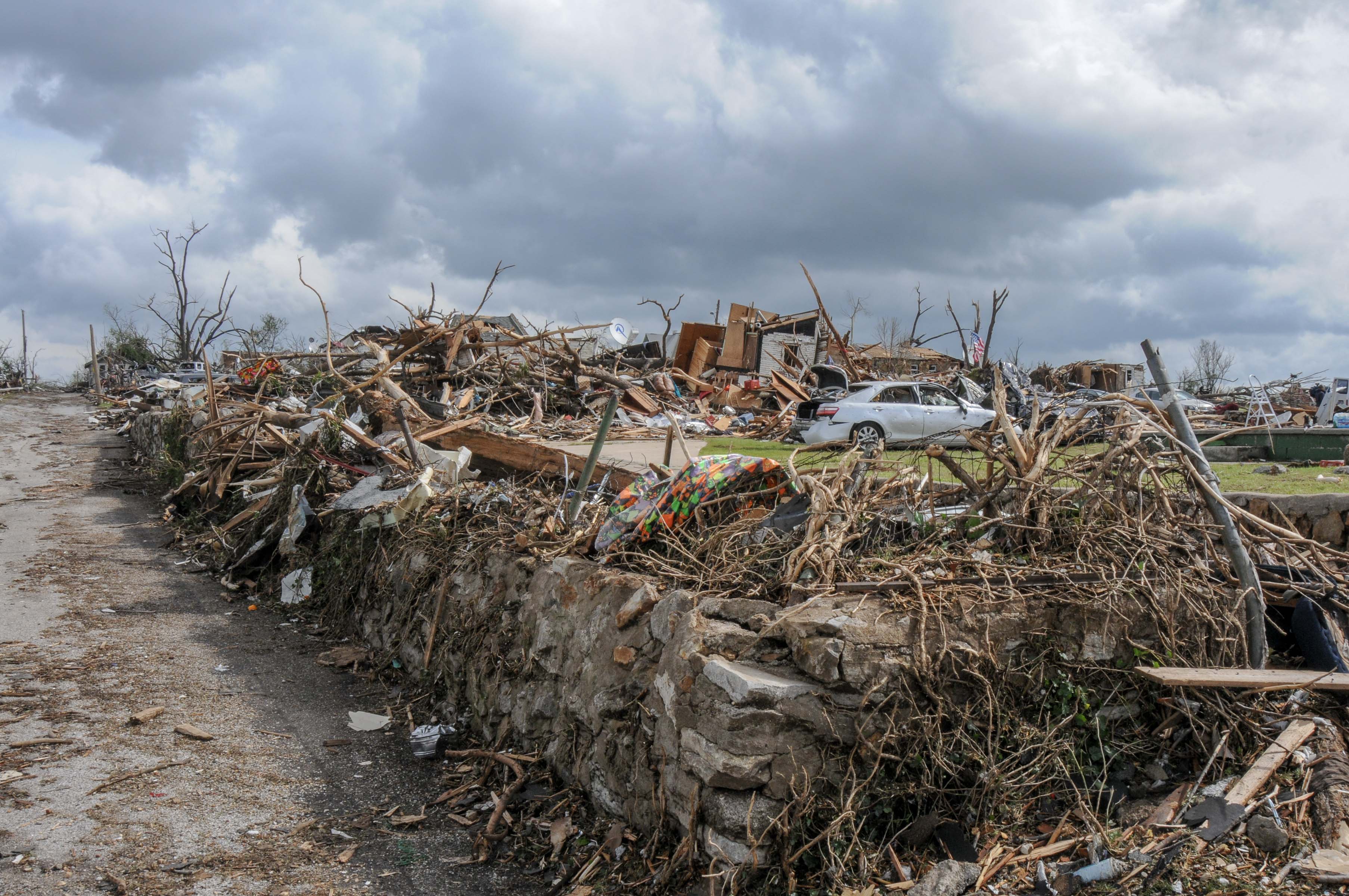
One week after a huge tornado ripped across this Missouri town of 50,000, authorities are still searching for 100 people listed as missing or unaccounted for.
Two families conducted a different kind of search over the week, trying to find perfect strangers brought together by one terrifying night.
Jimmie Joe Zaccarello, 49, had just survived a record tornado crushing like a trash compactor the Home Depot store where he worked. He crawled to safety through spaces in the collapsed steel roof outside.
He was told to stay put, he said, and be counted. But he walked away to offer help.
“The people I kept coming across were the deceased, and it was just horrible,” Zaccarello said. “Finally I found somebody alive, that I could do something, to try to help.”

Melody Dickey and her daughter Autumn Achey left a trailer to rush to the safety of a best friend’s house when the storm caught them.
They were stuck behind a slow moving truck. Dickey honked her horn, frustrated, when there was a sudden calm.
“There was no wind, there was no rain, there was nothing,” Dickey said. “The last place I remember the car being was down by Home Depot.”
Autumn remembered debris bursting through the rear windows. Melody remembered rolling, but not for how long.
“I just told Autumn to hold on, I think,” before her daughter slipped from under the seatbelt and out of the car, Dickey said. “That’s all I could think about. Autumn was gone. There was no way she could have lived through it.”
Autumn remembered sliding out of the car and covering her head, protecting herself from the storm. She hefted a large piece of metal debris off her back and called for her mother.
“I was just thinking ‘I hope Mom’s here,’” she said. Two large gashes had opened in her leg.
“Looked like a man took an ax to it,” Zaccarello said.
Autumn was covered in mud and blood. She could hear her mother call her name, and followed it, limping along.
They were the first living survivors Zaccarello found.
“He just walked right up and picked her up,” Melody said.
The short, wiry flooring specialist tore his shirt to tie a tourniquet on her leg. He could barely heft the little girl, but he struggled his way to emergency help, and angrily demanded they take her mother, too. Melody Dickey’s back was black with bruises and her shoulder dislocated.
And for nearly a week, that was the last they saw of each other.
Autumn’s father, Jim Achey, wandered the wreckage for hours that night before Melody could send him word where they were. The next person he wanted to find was the man named Jimmie who helped his family.
Zaccarello needed to find the family, too. His home and family passed the storm unscathed. But he’d lost a home in a fire in 2005, and a daughter to liver disease in 2006, he said.
He was depressed, thinking of all the death and destruction he saw Sunday, and desperate to know the little girl he helped — just two years older than his granddaughter — had made it through the storm.
“I’ve just lost so much,” Zaccarello said.
He called the local radio station, which has broadcast round-the-clock calls seeking friends, family, volunteers and places to drop donations. He choked up at times as he described his story.
A friend told Jim Achey about the call. They rushed to find a radio at the hospital. Melody knew Zaccarello’s voice instantly.
So Friday afternoon, a beaming Zaccarello and a tough, shy and exhausted Autumn had their reunion in the pediatrics ward of the town’s remaining hospital. She was cut and bandaged, and her leg hurt too much to walk. But she was safe.
“I just wanted something positive to come out of it, you know?” Zaccarrello said.
“It’s definitely positive, man,” Jim Achey said, tearing up. “You’ve got a friend for life.”
(Editing by Greg McCune and Jerry Norton)